TGH Cancer Institute and USF Health Morsani College of Medicine Convene International Scientific Leaders for the "Microbes, Genes & Cancer" Symposium
PR Newswire
TAMPA, Fla., April 6, 2026
Meeting in Tampa highlighted advances in microbial oncology, cancer biology and cancer immunology, as well as the 50th anniversary of the discovery of Interleukin-2.
TAMPA, Fla., April 6, 2026 /PRNewswire/ -- Internationally recognized leaders in oncology, virology, immunology, cancer biology and related fields gathered in Tampa on March 2-3 for the "Microbes, Genes & Cancer" Symposium, a high-level scientific meeting hosted by the Tampa General Hospital (TGH) Cancer Institute, the USF Health Morsani College of Medicine and the Global Virus Network (GVN).
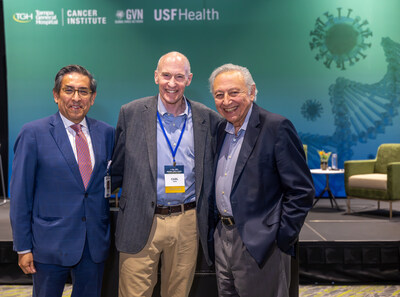
The symposium explored the latest research to better understand how microbes, genetics, epigenetics and immune pathways intersect to drive cancer development, progression and treatment response.
Taking place at the USF Morsani College of Medicine in downtown Tampa, in the heart of the Tampa Research and Medical District, the symposium served to underscore Tampa General's growing ability to attract many of the world's most influential scientific leaders around emerging questions in cancer biology and treatment. Designed for both established investigators and trainees, the Microbes, Genes & Cancer Symposium emphasized cross-disciplinary dialogue and practical insights to inform future research directions, clinical strategies and collaborative efforts.
The meeting kicked off International Science Innovation Week, a broader collaboration among the TGH Cancer Institute, the Global Virus Network and the USF Health Institute for Translational Virology and Innovation, which include the Microbe, Genes and Cancer Symposium and the 2026 Global Virus Network Annual International Scientific Meeting held later in the week.
"This symposium reflected what academic medicine makes possible when scientific ambition, clinical excellence and institutional partnership come together," said Dr. Eduardo M. Sotomayor, vice president and executive director of the TGH Cancer Institute and professor in the Department of Medicine at the University of South Florida Morsani College of Medicine.
"In just five years, the TGH Cancer Institute has become a driver of cancer research and innovation capable of convening many of the world's leading scientific minds to exchange ideas, spark collaboration and accelerate new discoveries for the benefit of cancer patients."
The meeting also marked a seminal moment in the history of cancer research: the 50th anniversary of the landmark discovery of Interleukin-2 (IL-2), which helped lay the foundation for modern cancer immunotherapy. It was the first T cell growth factor and the first cytokine used in cancer treatment, a breakthrough in cancer immunotherapy that opened the door to future advancements in retrovirology, HIV research and the development of modern T cell therapies, including CAR T cells. The work by Dr. Robert Gallo and colleagues at the National Cancer Institute in the mid-1970s fundamentally transformed how scientists understand, study and therapeutically manipulate the immune system.
Renowned worldwide for his groundbreaking HIV research as well as the discovery of the first human retrovirus, Gallo is the director of the USF Health Institute for Translational Virology and Innovation, co-founder of the Global Virus Network, the James P. Cullison Professor of Medicine in the Division of Infectious Diseases, USF Health Morsani College of Medicine and director of the Microbial Oncology Program at the TGH Cancer Institute.
The anniversary was recognized with a dedicated scientific session that featured six National Academy of Sciences and/or Medicine members and leading experts in IL-2 and T cell biology, which began with remarks from Gallo. The session included pioneers and current leaders in immunology and immunotherapy, including Dr. Carl June, director of the Center for Cellular Immunotherapies at the University of Pennsylvania and a pioneer of CAR T cell therapy; Dr. Steven Rosenberg, chief of surgery at the National Cancer Institute and a pioneer of T cell-based cancer immunotherapy; Dr. Drew Pardoll, director of the Bloomberg~Kimmel Institute for Cancer Immunotherapy at Johns Hopkins University and a leader in cancer immunotherapy and immune checkpoint research; Dr. Warren Leonard, senior investigator at the National Heart, Lung, and Blood Institute at the National Institutes of Health and a leading authority in cytokine and T cell biology; and Dr. Rafi Ahmed, director of the Emory Vaccine Center at Emory University, whom Gallo described as the world's foremost T cell immunologists.
"The discovery of IL-2 fundamentally changed how we study and harness the immune system," said Sotomayor. "It enabled the sustained growth of human T cells and laid the foundation for advances in immunology, retrovirology, HIV research and ultimately T cell based therapies, such as CAR T cells, which is resulting in cures of patients with blood cancers."
Presentations throughout the two days examined how viruses, bacteria, chronic inflammation and immune disruption can shape cancer risk, progression and treatment response. Sessions explored advances in HPV-related head and neck cancer, hepatitis-associated liver cancer, HIV-related cancer comorbidities, tumor-microbiome interactions, the biology of solid malignancies and blood cancers and emerging immunotherapy strategies. Together, the discussions illustrated how microbial oncology, immune biology and translational science are beginning to reshape cancer prevention, risk assessment and treatment for patients.
- Scientists discussed the growing burden of HPV-related oropharyngeal cancer and the continuing need for stronger vaccination, prevention and screening strategies as incidence rises across key populations.
- Researchers examined hepatitis-related liver cancer and examined how chronic viral infection, inflammation and altered gene pathways contribute to hepatocellular carcinoma, indicating potential opportunities for earlier detection and more targeted intervention.
- Sessions explored HIV and long-term cancer risk and how persistent immune dysregulation may shape later comorbidities, including cancer risk.
- Multiple talks focused on the microbiome and microbial products as active players in tumor biology, with implications for metastasis, immune signaling and response to therapy.
For Tampa General and USF Health, the symposium reflected a shared commitment to accelerating the translation of major scientific insights into better cancer prevention, diagnosis and treatment.
More information and a full agenda for "Microbes, Genes & Cancer" can be found at TGH Cancer Institute Meeting — Global Virus Network.
ABOUT TAMPA GENERAL HOSPITAL
Tampa General Hospital, the Tampa Bay region's only academic health system, is a 1,530-bed not-for-profit network of hospital and outpatient services spanning across Florida. As the only center for Level l trauma and comprehensive burn care center serving 23 counties, Tampa General delivers world-class care. The system's hospitals include Tampa General Hospital, Tampa General Rehabilitation Hospital, Tampa General Behavioral Health Hospital, all in Tampa; Tampa General Brooksville, Tampa General Spring Hill and Tampa General Crystal River. Tampa General is the highest-ranked hospital in Tampa Bay in U.S. News & World Report's 2025-2026 Best Hospitals, with six medical specialties ranking among the top 50 in the nation and five additional medical specialties ranked among the top 10% best hospital programs in the United States. As the first hospital in Florida to open a clinical command center for real-time situational awareness, the academic health system has elevated its digital care coordination center to the next level by leveraging artificial intelligence (AI) and its analytics platform across inpatient and outpatient care to ensure patients receive leading-edge care as quickly and safely as possible. Tampa General's commitment to growing and developing its team members is recognized by three prestigious Forbes magazine rankings — in the 2026 America's Best Large Employers ranked as the Tampa Bay region's #1 employer in the health care category for the sixth year in a row, and among the top five in the state of Florida, in the 2025 Best Employers by State and the 2023 America's Best Employers for Women.
Tampa General is the area's safety-net hospital, caring for anyone regardless of ability to pay; in fiscal year 2024, Tampa General provided a net community benefit of approximately $289.1 million in the form of health care for underinsured patients, community education and financial support to community health organizations in Tampa Bay. It is recognized as one of the adult solid organ transplant centers in the nation and is the primary teaching hospital for the USF Health Morsani College of Medicine. With five medical helicopters, Tampa General transports critically injured or ill patients from surrounding counties to receive the advanced care their conditions require. Tampa General has a nationally accredited comprehensive stroke center and its 32-bed Neuroscience Intensive Care Unit is the largest on the West Coast of Florida. It is home to the Muma Children's Hospital at TGH, the Jennifer Leigh Muma 82-bed neonatal intensive care unit and a nationally accredited rehabilitation center. Tampa General's footprint includes TGH North, which consists of three hospitals and several outpatient locations in Citrus and Hernando counties; 17 Tampa General Medical Group Primary Care offices; TGH Family Care Center Kennedy; two TGH outpatient centers; TGH Virtual Health; and 20 TGH Imaging outpatient radiology centers throughout Hillsborough, Pasco, Pinellas and Palm Beach counties. Tampa Bay area residents receive world-class care from the TGH Urgent Care, powered by the Fast Track network of clinics. To see a medical care professional live anytime, anywhere on a smartphone, tablet or computer, visit Virtual Health | Tampa General Hospital (tgh.org). For more information, go to www.tgh.org.
ABOUT USF HEALTH
USF Health is dedicated to making life better through research, education and patient care. It is the partnership of the USF Health Morsani College of Medicine, the College of Nursing, the College of Public Health, the Taneja College of Pharmacy, the School of Physical Therapy and Rehabilitation Sciences, the Biomedical Sciences Graduate and Postdoctoral Programs and USF Health's multispecialty physicians' group, the largest on Florida's west coast. In 2025, U.S. News & World Report ranked the USF Health Morsani College of Medicine as the No. 1 medical school in Florida and in the highest tier nationwide for research. U.S. News also ranked the USF College of Public Health and the USF College of Nursing's Master of Science program No. 1 in the state. Together with Tampa General Hospital, USF Health forms one of the nation's premier academic health systems, with more than 1,000 physicians and providers caring for more than one million patients each year. USF Health is part of the University of South Florida, a top-ranked research university and member of the Association of American Universities (AAU). USF serves approximately 50,000 students and generates nearly $10 billion in annual economic impact for Florida. For more information, visit health.usf.edu.
Media Contact: Beth Hardy, APR | USF Health Media Contact: Cody Hawley |
Assistant Manager | Senior Director |
Publications & Physician Communications | USF Health Communications & Marketing |
(727) 510-6363 | (cell) (860) 235-1001 |
 View original content to download multimedia:https://www.prnewswire.com/news-releases/tgh-cancer-institute-and-usf-health-morsani-college-of-medicine-convene-international-scientific-leaders-for-the-microbes-genes--cancer-symposium-302734928.html
SOURCE Tampa General Hospital