
The Distraction Epidemic: Academic Success Strategies to Help Kids Focus Better in School and at Home
Fort Worth, United States - December 2, 2025 / Math Around The Corner /
FORT WORTH, TX - Students today face more distractions than any generation before. Between smartphones, social media, noisy classrooms, and demanding schedules, maintaining focus has become one of the biggest challenges for learning. Math Around the Corner helps families understand how to improve focus in school by implementing practical academic success strategies at home and in the classroom.

Understanding the Distraction Problem
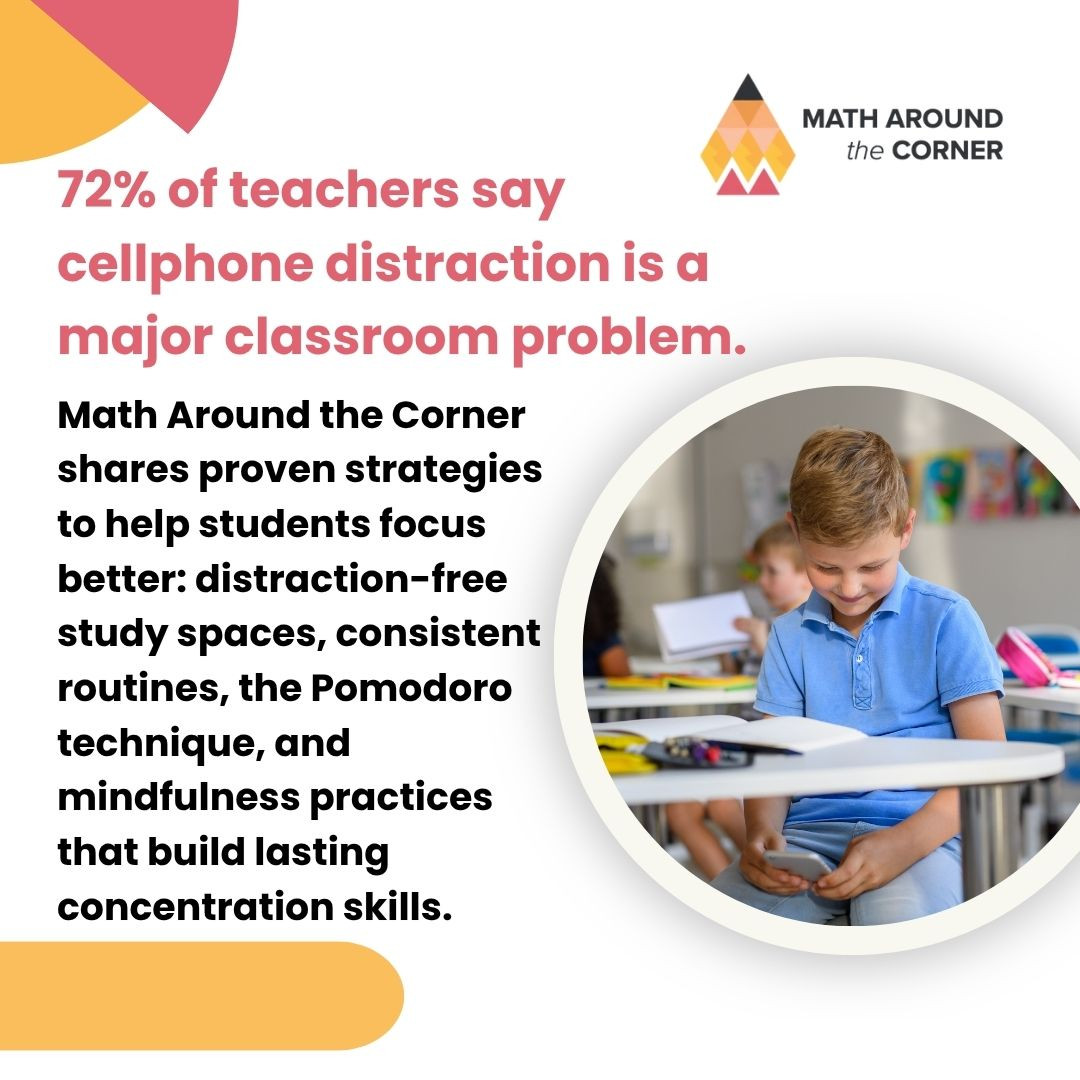
The numbers reveal a concerning trend. According to the Pew Research Center, 72% of high school teachers report that students being distracted by cellphones is a major problem in their classrooms. About one-third of educators say that students who use devices for learning are off-task for more than a quarter of their class time.
This goes beyond just phones. Students face distractions from peers talking, environmental noise, hunger, fatigue, and their own wandering thoughts. Each distraction pulls focus away from learning, and getting back on track takes time. Students may need up to 20 minutes to fully refocus after being interrupted.
Main Causes of Poor Focus
Digital overload has trained brains to expect constant stimulation. Apps are designed to grab attention with notifications and endless scrolling. This conditioning makes sitting through a lesson feel difficult for many students.
Sleep deprivation affects concentration significantly. Many students do not get enough quality rest due to homework, activities, and screen time. Tired brains cannot focus effectively, and memory formation suffers.
Poor nutrition creates energy crashes that hurt concentration. Skipping breakfast, eating high-sugar snacks, and drinking excessive caffeine all lead to periods where focus becomes nearly impossible.
Lack of structure makes attention harder to maintain. Students without consistent routines struggle more because their brains expend energy figuring out what comes next instead of focusing on learning.
How to Focus Better in School
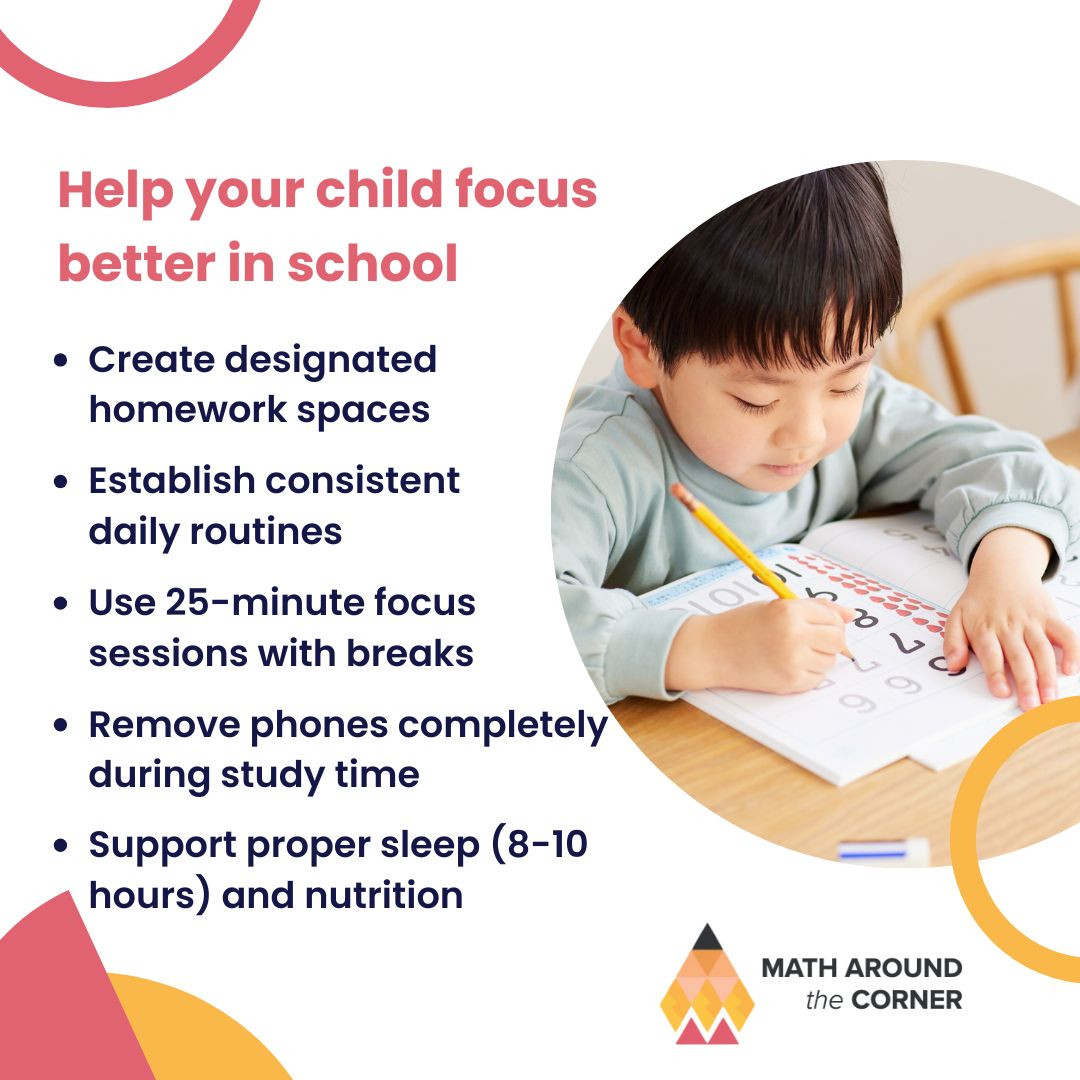
Create distraction-free study spaces at home. Designate a specific spot for homework that stays the same each day. This space should have good lighting, comfortable seating, and necessary supplies within reach. Remove phones and other temptations from the area.
Establish consistent routines that reduce mental energy spent on decisions. Set specific times for homework, meals, and sleep. When students know homework happens at 4:00 PM daily, their brains prepare for focus as that time approaches.
Use time management techniques like the Pomodoro method. Set a timer for 25 minutes of focused work, followed by a 5-minute break. This structure makes extended focus feel achievable while building concentration stamina gradually.
Minimize digital distractions completely during study time. Phones should be out of sight in another room, not just face down on the desk. Use apps that block distracting websites during study periods and turn off all notifications.
Building Student Organization Skills
Student organization skills directly impact concentration. When students spend energy searching for materials or remembering due dates, they have less mental capacity for actual learning.
Start with physical organization. Students need designated spots for everything: a folder for each class, a planner for assignments, and a homework station at home. Color-coding helps younger students remember which materials go with which subjects.
Time management is part of organization skills too. Students benefit from learning to estimate how long tasks take, break large projects into smaller steps, and prioritize based on deadlines. These skills develop gradually through practice.
Academic Success Strategies That Work
Encourage physical activity to boost concentration. Even moderate exercise increases blood flow to the brain, improving focus. Short movement breaks during homework help reset attention.
Practice mindfulness techniques to strengthen attention. Simple breathing exercises, even just 5 minutes daily, help students notice when their minds wander and redirect focus back to tasks.
Implement active learning instead of passive studying. Taking notes by hand, asking questions, explaining concepts aloud, and teaching material to someone else keeps attention sharp.
Support proper sleep and nutrition as foundational elements. Students need 8-10 hours of sleep for optimal brain function. Protein-rich breakfasts and healthy snacks maintain stable blood sugar and steady concentration throughout the day.
Improve Focus in School: Moving Forward
Helping students develop stronger concentration takes time and consistent effort. The academic success strategies outlined here provide a starting point for parents and teachers working to improve focus in school and at home. Small changes implemented consistently create significant improvements in attention, learning, and academic performance over time.
For details about Math Around the Corner’s tutoring approach that strengthens both academic skills and student confidence, call (817) 720-6284 or email hello@matharoundthecorner.com.

About Math Around the Corner
Established in 2006, Math Around the Corner is a privately owned tutoring center in Fort Worth providing personalized, one-on-one support for students from Kindergarten through college. Serving more than 400 students across the Fort Worth area, the center offers K–12 tutoring, SAT and ACT preparation, and college readiness programs. Math Around the Corner is located at 6134 Southwest Blvd, Fort Worth, Texas.

Contact Information:
Math Around The Corner
6134 Southwest Blvd
Fort Worth, TX 76109
United States
Carol Bearden
https://matharoundthecorner.com/
Original Source: https://matharoundthecorner.com/resources/the-distraction-epidemic-how-to-help-kids-focus-better-in-school-and-at-home