
How Fire Prevention Technology Is Transforming Departments
oviedo, United States - January 26, 2026 / EPR Fireworks /
Key Takeaways
Fire prevention technology is rapidly reshaping how departments protect communities and meet compliance standards.
The fire protection system market is projected to grow from $72 billion in 2025 to over $111 billion by 2032, driven largely by cloud-based and AI-enabled solutions
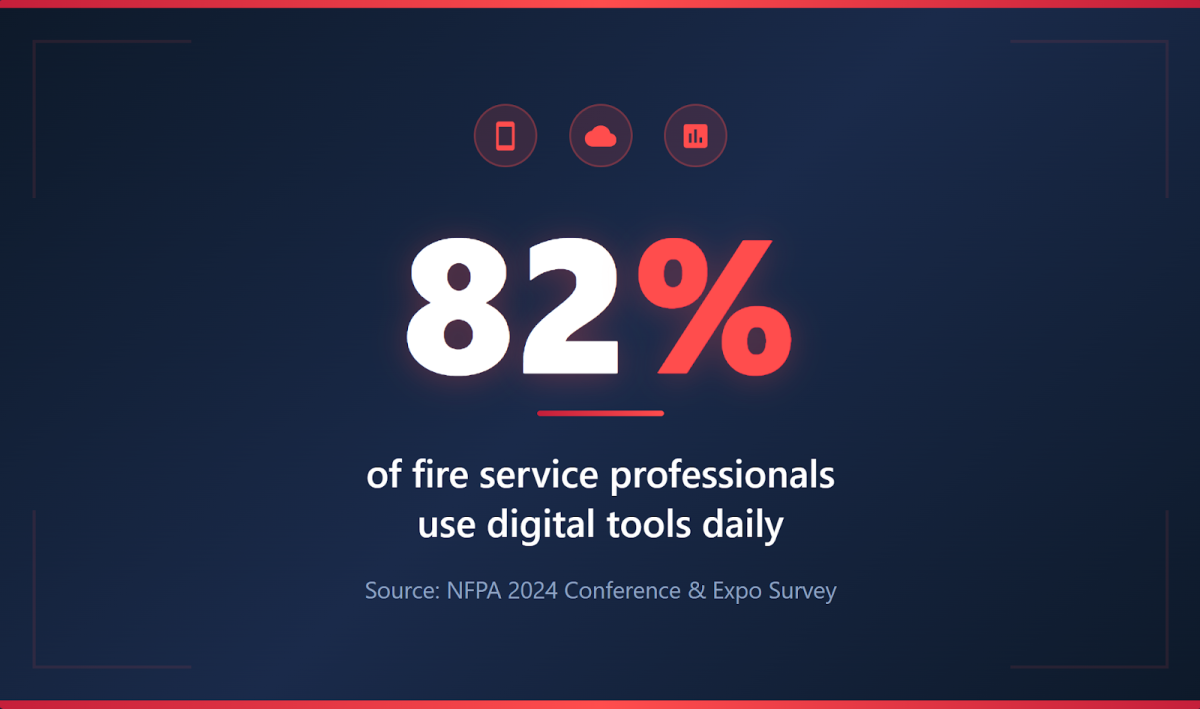
Eighty-two percent of fire service professionals now use digital tools daily to streamline operations and training programs
The transition from NFIRS to NERIS represents the most significant federal data modernization effort in decades, pushing departments toward modern RMS platforms
Departments that invest in integrated prevention software see measurable improvements in inspection completion rates, compliance tracking, and inter-agency coordination
Now is the time to evaluate whether your current systems can keep pace with these changes.
Fire departments across the country are facing a pivotal moment. Between tightening compliance requirements, rising call volumes, and the nationwide transition from NFIRS to NERIS, the pressure on prevention divisions has never been greater. Fire prevention technology has emerged as the critical differentiator between departments struggling to keep up and those staying ahead of the curve. According to the National Fire Protection Association's 2024 survey, 82 percent of skilled trades professionals in fire and electrical safety now use digital tools daily to manage training and operations. That number continues to climb as fire and EMS agencies recognize the operational advantages that modern prevention software delivers.
The shift toward digital isn't optional anymore. It's the new baseline for departments that want to protect their communities effectively while meeting evolving state and federal requirements.
What Is Driving the Adoption of Fire Prevention Technology?
Several converging factors are accelerating the move toward digital fire inspection tools and prevention software. Understanding these drivers helps department leaders make informed decisions about technology investments.
How Are Regulatory Changes Shaping Technology Needs?
The federal government's transition from the legacy National Fire Incident Reporting System (NFIRS) to the new National Emergency Response Information System (NERIS) represents a watershed moment. NFIRS will sunset in February 2026, and departments must migrate to platforms capable of handling the new data requirements. The U.S. Fire Administration has been clear that the old system's limitations prevented effective data sharing and offered no analytics capabilities. NERIS changes that equation entirely, introducing cloud-based reporting, GIS-enabled incident data, and real-time analytics. The first 165 fire departments were successfully onboarded in late 2024, with thousands more scheduled throughout 2025.
This isn't just a backend IT change. It directly impacts how prevention divisions track inspections, manage compliance, and generate reports. Departments without modern RMS platforms risk falling behind on mandatory reporting requirements.
Why Is Data-Driven Decision Making Essential Now?
Fire service leaders increasingly recognize that gut instinct alone can't optimize resource allocation. Community fire safety tech powered by robust analytics enables prevention officers to identify high-risk properties, prioritize inspections based on actual hazard data, and demonstrate program effectiveness to elected officials and budget committees.
According to market research, the fire protection system market is projected to grow from $72 billion in 2025 to over $111 billion by 2032, with much of that growth driven by IoT-enabled detection systems and AI-powered monitoring. Prevention divisions need to be part of that conversation, connecting their inspection data to broader departmental intelligence systems.
What Features Matter Most in Modern Prevention Software?
Not all fire inspection digital tools are created equal. When evaluating prevention software, department leaders should focus on capabilities that directly impact daily operations and long-term compliance.
Feature | Why It Matters |
Mobile-optimized inspections | Allows field completion without connectivity, syncs automatically when online |
Automated scheduling | Prevents missed annual inspections and generates re-inspection reminders |
Integrated violation tracking | Links inspection findings to property records and incident history |
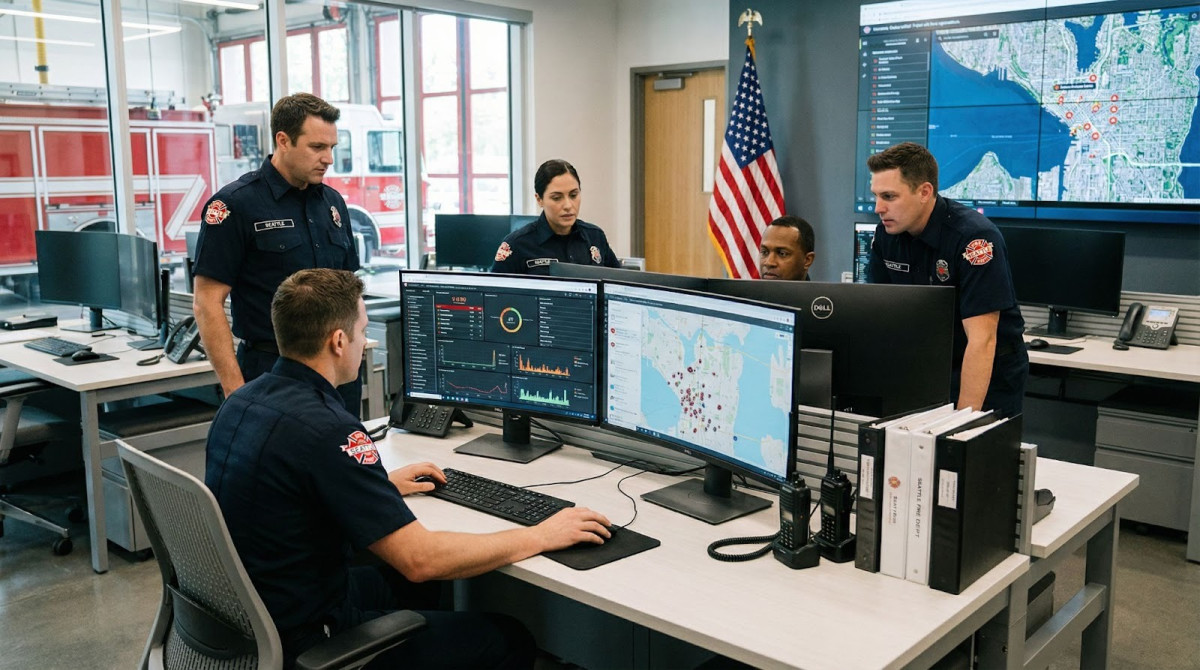
Real-time analytics dashboards | Enables fire marshals to monitor inspector productivity and compliance rates |
GIS mapping integration | Connects property data to hydrant locations, pre-plans, and response zones |
Digital report delivery | Sends inspection results directly to property owners from the field |
These features aren't luxuries. They're the foundation of efficient prevention operations in 2025 and beyond.
How Does Cloud-Based Architecture Change Operations?
Cloud-based prevention software eliminates the infrastructure headaches that plagued earlier generations of fire department software. There's no server room to maintain, no software installations to manage across multiple workstations, and no version compatibility issues when inspectors use different devices.
More importantly, cloud architecture enables real-time data sharing between suppression and prevention divisions. When a certified inspector notes a violation during a business inspection, that information becomes instantly available to engine companies responding to emergencies at the same address. This integration between pre-planning and inspection functions represents exactly the kind of operational efficiency that modern fire prevention technology delivers.
What Are the Top Benefits of Digital Fire Prevention Programs?
Departments that have made the transition to comprehensive prevention software consistently report measurable improvements across several key metrics.
Five Core Benefits of Modern Prevention Technology:
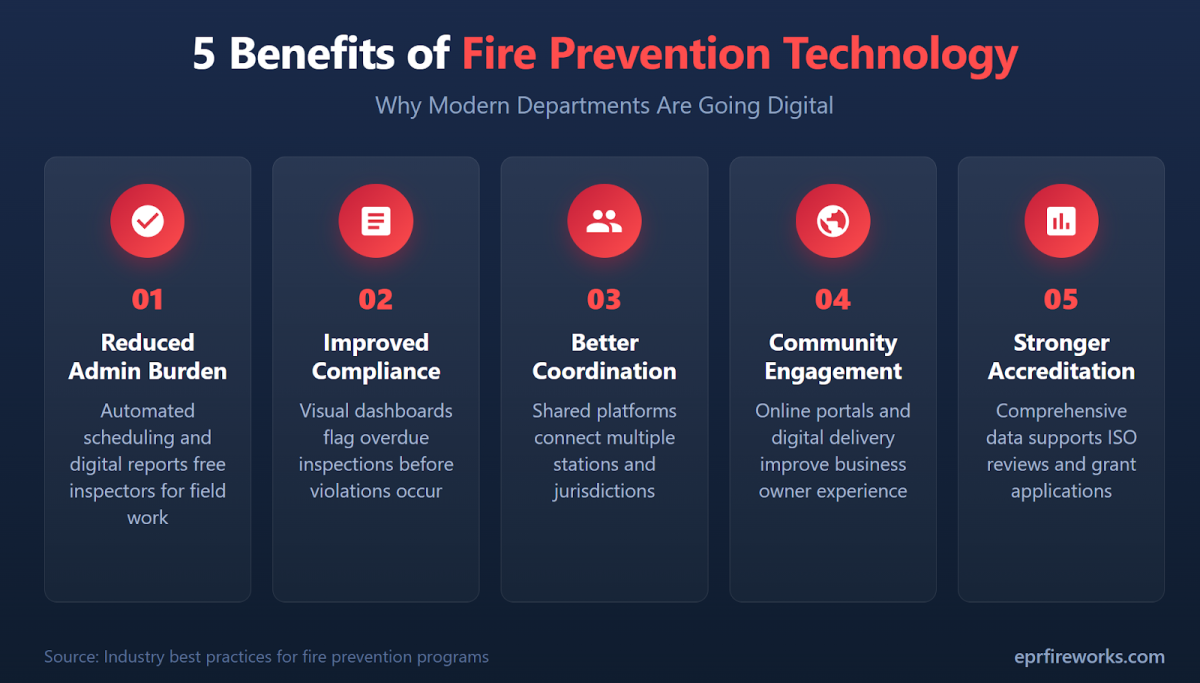
Reduced administrative burden – Automated scheduling, digital report generation, and electronic record keeping free up inspector time for actual field work
Improved compliance rates – Visual dashboards make it easy to identify overdue inspections before they become compliance violations
Better inter-agency coordination – Shared platforms allow multiple stations and jurisdictions to access the same property and inspection data
Enhanced community engagement – Online payment portals and digital report delivery improve the experience for business owners and property managers
Stronger grant and accreditation support – Comprehensive data documentation simplifies the process of demonstrating program effectiveness to ISO reviewers and grant administrators
These benefits compound over time. Departments that invest early in fire prevention technology build institutional knowledge and data assets that become increasingly valuable as community fire safety tech continues to evolve.
How Should Departments Prepare for the NERIS Transition?
The NERIS rollout is happening now. Departments that participate in national fire data programs will need NERIS-compatible reporting platforms before NFIRS goes offline.
NERIS Readiness Factor | Action Steps |
RMS compatibility | Verify your current platform supports NERIS V1 data exchange |
Staff training | Begin familiarizing prevention staff with new data field requirements |
Data migration planning | Audit existing inspection records for completeness and accuracy |
Integration testing | Work with your RMS vendor to test data submission workflows |
Departments using paper-based systems or outdated software face a steeper climb. Now is the time to evaluate whether current systems meet the new federal requirements and explore comprehensive RMS solutions designed for fire service operations.
What Questions Should Chiefs Ask When Evaluating Prevention Software?
Before committing to any platform, fire chiefs and prevention division leaders should conduct thorough due diligence. The right prevention software will serve your department for years, so taking time upfront prevents costly mistakes.
Consider asking vendors about their experience with fire service clients specifically. General inspection software designed for building departments or code enforcement agencies may lack the specialized features that fire prevention divisions require. Look for platforms built by teams with actual fire service experience who understand the unique workflow challenges prevention bureaus face daily.
Also verify that the platform includes comprehensive property management, inspection scheduling, violation tracking, and analytics capabilities within a single system rather than requiring separate subscriptions for different functions.
Frequently Asked Questions
What is fire prevention technology? Fire prevention technology encompasses digital tools and software platforms that help fire departments manage inspections, track compliance, maintain property records, and generate reports. Modern systems include mobile inspection apps, cloud-based data storage, automated scheduling, and analytics dashboards.
How much does fire prevention software typically cost? Costs vary based on department size, required modules, and implementation complexity. Many cloud-based platforms operate on subscription models that scale with user count. The best approach is to request demos from multiple vendors and compare total cost of ownership including training and support.
Is the NERIS transition mandatory for all fire departments? NERIS is replacing NFIRS as the federal fire incident reporting system, with NFIRS sunsetting in February 2026. Departments that participate in national fire data programs will need to transition to NERIS-compatible reporting platforms.
Take the Next Step Toward Modern Fire Prevention
Fire prevention technology has moved from nice-to-have to mission-critical. The departments succeeding today are those that embraced digital transformation early and built the data infrastructure to support smarter, faster, more accountable prevention operations.
EPR FireWorks offers a unified platform designed specifically for fire and EMS agencies, with integrated inspection management, pre-planning tools, and NERIS-compatible reporting built in. To see how modern prevention software can transform your department's operations, schedule a call with the EPR Fireworks team today.


Contact Information:
EPR Fireworks
257 Plaza Dr Suite D
oviedo, FL 32765
United States
info epr
https://eprfireworks.com/